Is Chemical Peel safe for Darker Skin Tones with Hyperpigmentation?
When it comes to skincare, one of the biggest struggles for people with darker skin tones is dealing with hyperpigmentation. Those stubborn dark spots, uneven patches, or marks left behind by acne can be frustrating.
Many people turn to treatments like chemical peels to fade pigmentation and achieve smoother, brighter skin. But here's the big question: Are chemical peels safe for darker skin tones?
The short answer: Yes, chemical peels can be safe and effective for darker skin—but only when done correctly and under expert guidance.
In this article, we'll break down everything you need to know in simple, everyday language so you can make the best decision for your skin.
Understanding Hyperpigmentation in Darker Skin
Hyperpigmentation is when certain parts of your skin appear darker than the rest. This happens because of excess melanin production—the natural pigment that gives your skin its color.
For people with darker skin tones, melanin is more active. That's why hyperpigmentation can look more noticeable and sometimes take longer to fade.
Common causes include:
- Acne scars (post-inflammatory hyperpigmentation)
- Sun exposure without proper sunscreen
- Hormonal changes (melasma, pregnancy-related pigmentation)
- Skin injuries (cuts, burns, or even aggressive skin treatments)
While hyperpigmentation is harmless, many people want to treat it for smoother, even-toned skin.
What Exactly is a Chemical Peel?
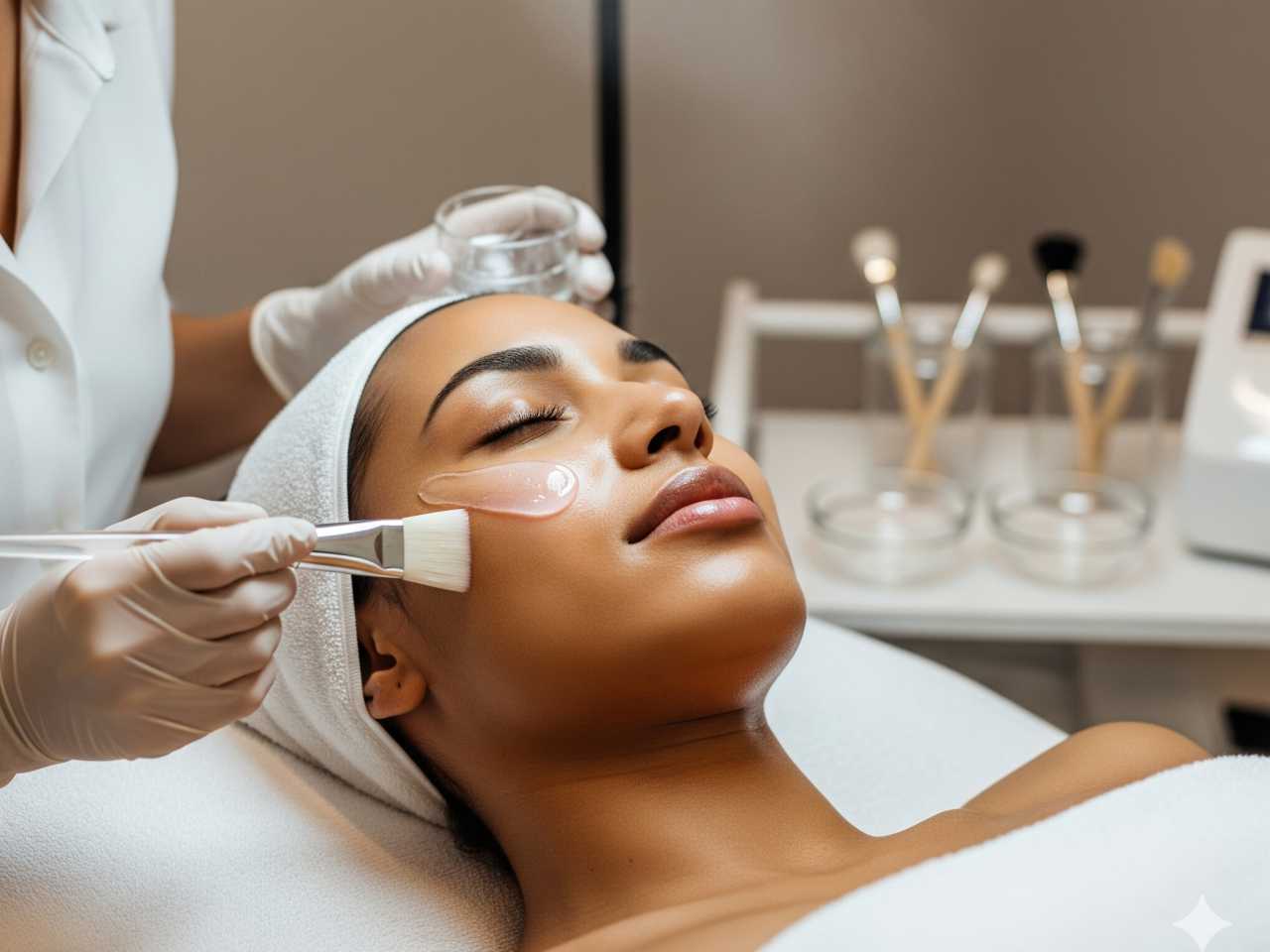
A chemical peel is a skin treatment where a solution containing acids (like glycolic acid, salicylic acid, or lactic acid) is applied to the skin. This solution exfoliates the top layers, removing dead and damaged skin cells.
Depending on the depth of the peel, it can:
- Lightly exfoliate for a glow (superficial peel)
- Target acne and dark spots (medium peel)
- Improve scars and wrinkles (deep peel—usually not recommended for darker skin tones)
The idea is simple: once the top layer peels off, new, healthier skin comes forward, often looking clearer and brighter.
Is It Safe for Darker Skin Tones?
This is where things get tricky. Darker skin tones are more sensitive to irritation and post-treatment pigmentation. That means if a peel is too strong, it can actually worsen the problem instead of fixing it.
However, the good news is that superficial and some medium chemical peels can be safe for darker skin when chosen carefully. The key is using the right type of peel and working with a trained dermatologist or licensed professional who understands melanin-rich skin.
Best Types of Chemical Peels for Darker Skin
Not all chemical peels are created equal. Here are the ones generally considered safe and effective for hyperpigmentation in darker skin tones:
| Peel Type | Description | Benefits for Dark Skin |
|---|---|---|
| Glycolic Acid Peel | Made from sugar cane, works on top layer | Good for mild hyperpigmentation, must use low concentrations |
| Lactic Acid Peel | Gentle, hydrating, less irritating | Great for sensitive skin, helps with mild pigmentation |
| Mandelic Acid Peel | From bitter almonds, larger molecule, slow penetration | Very safe for darker skin, effective for acne-related pigmentation |
| Salicylic Acid Peel | Oil-loving acid, good for acne-prone skin | Helps fade post-acne dark spots |
| Jessner's Peel (modified) | Blend of multiple acids, when gentler | Works on dark spots and uneven tone |
⚠️ Avoid deep peels (like phenol peels) because they carry a higher risk of scarring and uneven pigmentation in darker skin.
Benefits vs Risks for Darker Skin
Benefits when done correctly:
- Fading dark spots and acne scars
- Smoother skin texture
- Brighter and more even skin tone
- Reduction in acne breakouts
- Boosted confidence from clearer skin
Results take time - usually multiple sessions are needed.
Potential risks:
- Post-inflammatory hyperpigmentation (PIH) – skin gets darker after the peel
- Hypopigmentation – lighter patches if too much pigment is removed
- Scarring – rare but possible with strong peels
- Redness, peeling, irritation – part of healing but can be more intense
Pre-Care and Aftercare: How to Stay Safe
To reduce risks and get the best results, follow these simple steps:
Before Your Peel
- Consult a dermatologist—don't DIY strong peels at home
- Stop using harsh products (retinoids, scrubs, strong exfoliants) at least a week before
- Always use sunscreen leading up to the peel
After Your Peel
- Moisturize generously—skin will feel dry and tight
- Avoid sun exposure—UV rays can trigger more pigmentation
- Don't pick or peel the skin—let it shed naturally
- Use gentle cleansers—no harsh scrubbing
At-Home vs. Professional Peels
You'll find plenty of at-home peel kits online, but here's the truth: darker skin needs extra caution. A professional can judge the right acid type and strength for you. At-home peels are best kept at very mild levels (like lactic or mandelic acid serums).
If you want noticeable improvement for stubborn pigmentation, it's always safer to go with a dermatologist.
Alternatives to Chemical Peels
If you're nervous about peels, there are other safe treatments for hyperpigmentation in darker skin tones:
- Topical treatments like vitamin C, niacinamide, or azelaic acid
- Microneedling (done professionally)
- Laser treatments (but only those proven safe for darker skin)
- Hydroquinone (under doctor's supervision) for stubborn dark spots
Sometimes, combining treatments gives the best results.
FAQs About Chemical Peels and Dark Skin
No, usually multiple sessions are needed. Results show gradually over weeks.
Yes, but the peel type must be chosen carefully. Salicylic acid peels are often used for acne-prone skin.
Only very mild ones. Stronger peels should always be done by professionals.
Mild peels may take 3–5 days, while medium peels can take up to 1–2 weeks.
The goal is not to change your natural skin color but to even out dark spots and bring a healthy glow.
Final Thoughts
So, is a chemical peel safe for darker skin tones with hyperpigmentation? Yes—when done right.
With the proper type of peel, professional guidance, and good aftercare, chemical peels can help fade stubborn dark spots and improve skin texture. But the risks are higher if peels are too strong or done incorrectly.
If you're thinking about trying one, start with a consultation. Your skin deserves care that's safe and effective. And remember—clear, glowing skin is a journey, not an overnight fix.